Calcified nodules and PCI

State-of-the-Art

Dec 8
Calcified nodules and PCI
Ziad A. Ali, Doosup Shin, et al.
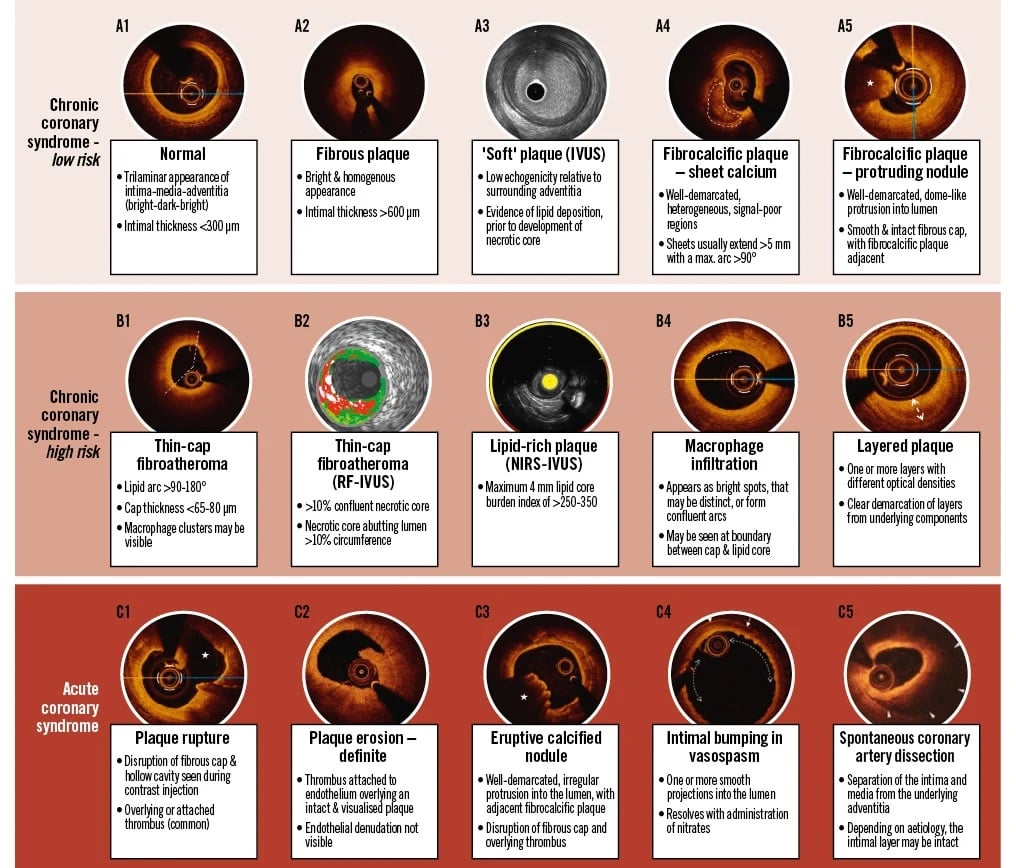
Calcified nodules (CNs) pose challenges in percutaneous coronary intervention (PCI) due to their complex morphology and variable treatment responses. CNs are classified into eruptive and non-eruptive subtypes, with distinct features and prognostic implications.
free

Editorial

Dec 5
Beta blockers after MI still relevant for many
Johanne Silvain, Niki Procopi
A meta-analysis of 23,531 post-MI patients found that beta blocker use may only provide a modest morbidity reduction, and withdrawal may be safe for some, but continuation remains relevant for most post-MI patients.
Beta blockers after MI still relevant for many
free

Original Research

Dec 3
Beta blocker withholding/withdrawal after MI
Xavier Rossello, Borja Ibanez, et al.
In patients with myocardial infarction and LVEF >40%, beta blocker withholding or withdrawal at discharge was not associated with increased short-term or recurrent ischaemic events.
Beta blocker withholding/withdrawal after MI
open access

State-of-the-Art

Dec 2
Management of NSTE-ACS
Mila Kovacevic, Vijay Kunadian, et al.
This review provides a comprehensive overview of current evidence-based approaches to the management of non-ST-segment elevation acute coronary syndrome, focusing on diagnosis, risk stratification, and treatment strategies.
Management of NSTE-ACS
free

new issue

Dec 1
A new issue of EuroIntervention

State-of-the-Art on the management of NSTE-ACS; State-of-the-Art on calcified nodules and PCI; beta blockers after MI; abbreviated antiplatelet therapy in HBR patients with CKD; thrombosis after Reducer migration

A new issue of EuroIntervention

letter to the editor

Nov 27
Letter: TAVI and covert brain injury
Nikolaos Pyrpyris, Konstantinos Tsioufis, et al.

This letter discusses the need to evaluate the addition of novel pharmacotherapy to current regimens in order to improve outcomes related to leaflet thrombosis and cerebral injury after TAVI procedures.

free

letter to the editor

Nov 27
Reply: TAVI and covert brain injury
Victor Alfonso Jimenez Diaz, Paula Bellas Lamas, et al.

The reply adresses the need for further research on optimal post-TAVI regimens to balance ischaemic, embolic, bleeding, and cognitive risks, and the prevention of covert brain injury in the TAVI population.

free
Turning Point Podcast Listen now


Thrombosis after Reducer migration

Flashlight

Dec 1
Thrombosis after Reducer migration
Leonardo Portolan, Giovanni Luigi De Maria, et al.
This case report describes the successful implantation of a double coronary sinus Reducer device in a patient with refractory angina, complicated by proximal migration of the initial Reducer and subsequent coronary sinus thrombosis detected by cardiac CT.

Subscribe banner

Original Research

Nov 26
Coronary cannulation after Evolut FX
Yohei Ohno, Guilherme F. Attizzani, et al.

The study found that coronary cannulation after TAVI with the Evolut FX valve was highly feasible due to a high rate of commissural and coronary alignment, but coronary misalignment was the strongest predictor of suboptimal coronary cannulation for both the left and right coronary arteries.

Coronary cannulation after Evolut FX

Editorial

Nov 26
TAV alignment: progress and remaining gaps
Ignacio J. Amat-Santos, Filippo Pensotti
This study demonstrates high coronary cannulation success rates with new-generation transcatheter heart valves, but moderate-to-severe coronary misalignment remains a concern that requires dedicated procedural strategies or device designs.
TAV alignment: progress and remaining gaps
free

Expert Consensus

Nov 25
TTVI patients undergoing TAVI
Jean-Claude Deharo, Fabien Praz, et al.

This scientific statement provides guidance on the management of patients with cardiac implantable electronic device leads crossing the tricuspid valve who are undergoing transcatheter tricuspid valve interventions.

TTVI patients undergoing TAVI

Viewpoint

Nov 24
ACURATE platform discontinuation
Won-Keun Kim, Helge Möllmann
The ACURATE transcatheter heart valve platform was discontinued by Boston Scientific in 2025 due to disappointing results in the randomized IDE trial with the ACURATE neo2 valve, preceded by negative outcomes in the SCOPE I and SCOPE II trials with the first-generation ACURATE neo valve.
ACURATE platform discontinuation
free

Original Research

Nov 21
The TRICURE first-in-human study
Emmanuel Teiger, Julien Dreyfus, et al.
The TRICURE first-in-human study evaluated a novel transcatheter tricuspid valve replacement system, demonstrating the feasibility and safety of the device, with successful elimination of tricuspid regurgitation in all patients.
The TRICURE first-in-human study
open access

Original Research

Nov 20
HALT following TAVI using S3UR
Kenichi Ishizu, Kentaro Hayashida, et al.
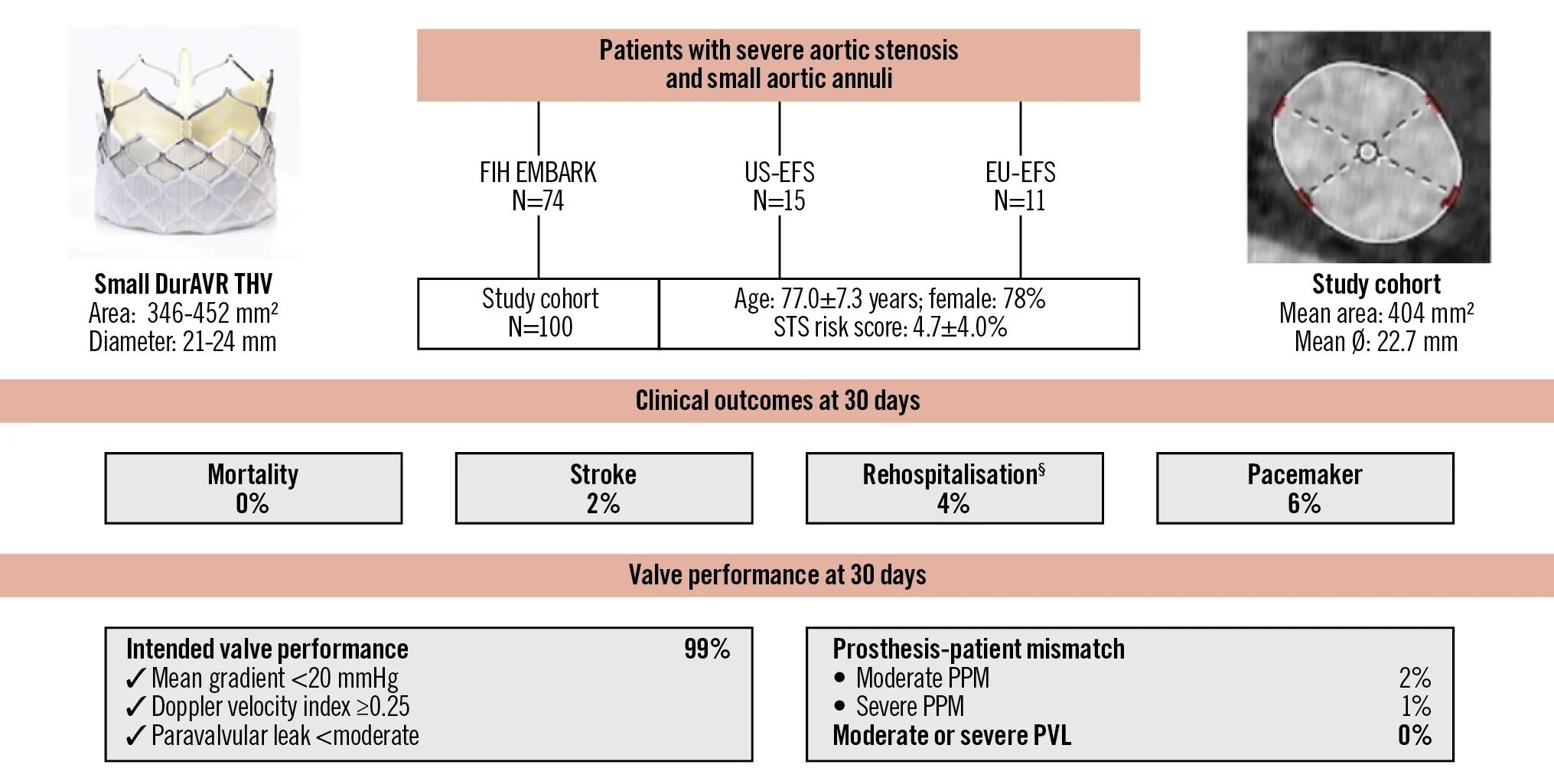
This study found that hypoattenuating leaflet thickening (HALT) was detected in 21.3% of patients 30 days after transcatheter aortic valve implantation with the latest-generation SAPIEN 3 Ultra RESILIA THV. Hourglass-shaped THV frame and asymmetric leaflet expansion were associated with increased HALT risk.
HALT following TAVI using S3UR

Receive our newsletter

PCR
Impact factor: 9.5
2024 Journal Citation Reports®
Science Edition (Clarivate Analytics, 2025)
Online ISSN 1969-6213 - Print ISSN 1774-024X
© 2005-2025 Europa Group - All rights reserved