Abstract
Background: The recurrences of acute coronary syndrome (ACS) and target vessel failure after percutaneous coronary intervention (PCI) remain clinical concerns. Intravascular imaging, such as optical coherence tomography (OCT) or intravascular ultrasound (IVUS), has demonstrated clinical benefits in patients with stable coronary disease; however, the benefits of its use remains unclear in patients with ACS.
Aims: This study aimed to investigate the benefit of imaging-guided PCI in patients with ACS on the recurrence of ACS using a nationwide database in Japan.
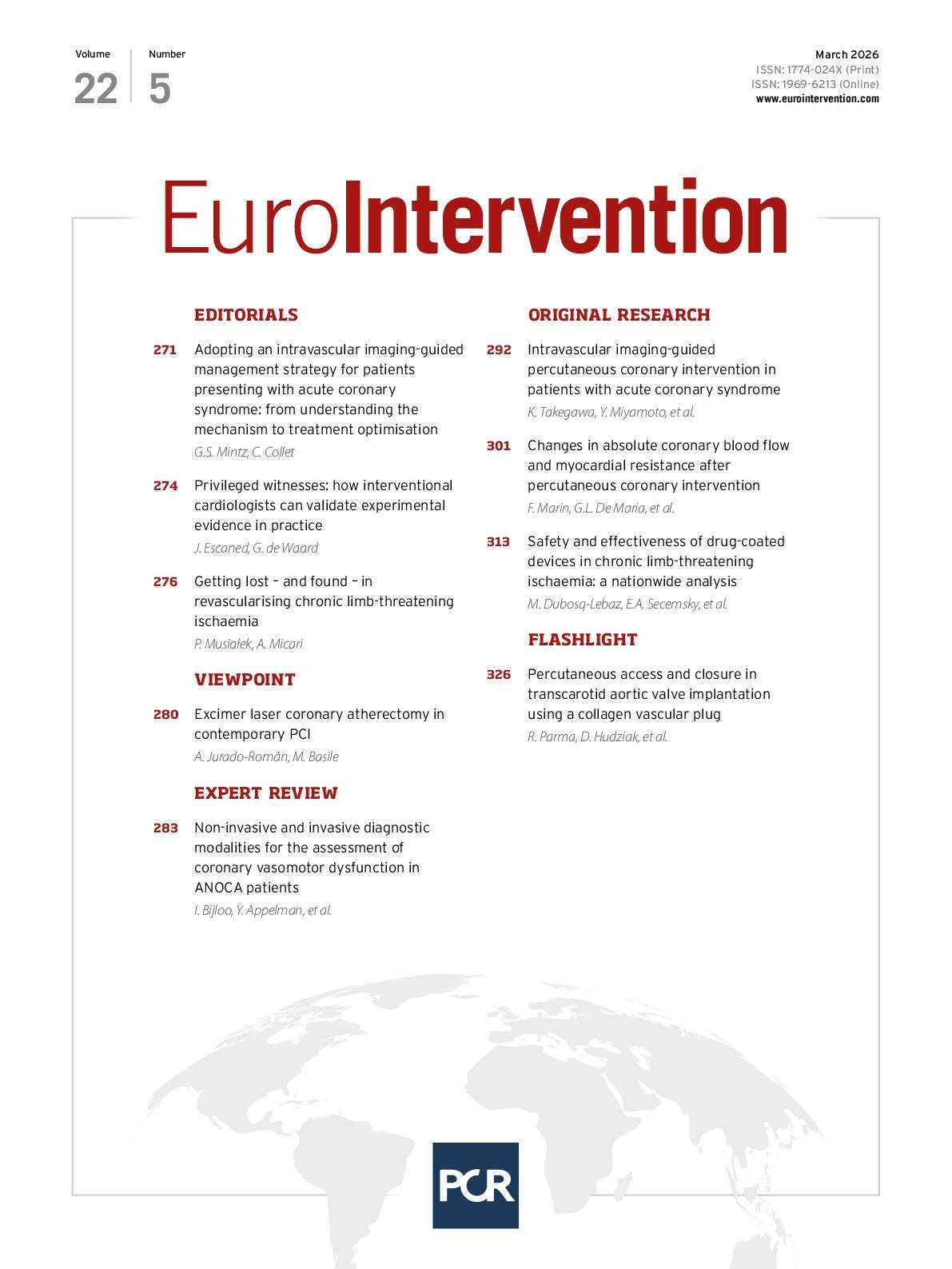
Methods: This retrospective observational study used records from the National Database between April 2014 and March 2021. We included patients hospitalised with ACS aged ≥20 years who had undergone first-time PCI and divided them into imaging-guided PCI (OCT or IVUS) and angiography-guided PCI groups. The primary outcome was ACS recurrence during a 3-year follow-up period. We analysed the association between intravascular imaging and the outcome using inverse probability of treatment weighting.
Results: Among the patients with ACS, angiography-guided PCI, OCT-guided PCI, and IVUS-guided PCI were performed in 32,044, 22,748, and 297,944 patients, respectively. During the study period, both OCT- and IVUS-guided PCI rates increased, from 4.7% to 6.9% and from 77.0% to 87.9%, respectively. OCT-guided PCI was associated with a lower risk of ACS recurrence (hazard ratio [HR] 0.81, 95% confidence interval [CI]: 0.71-0.91; p<0.001); IVUS-guided PCI was also associated with a lower risk of ACS recurrence (HR 0.76, 95% CI: 0.71-0.82; p<0.001).
Conclusions: In real-world clinical practice, the rates of both OCT- and IVUS-guided PCI have increased and have been associated with a lower risk of ACS recurrence compared with angiography-guided PCI in patients with ACS.
Sign up for free!
Join us for free and access thousands of articles from EuroIntervention, as well as presentations, videos, cases from PCRonline.com